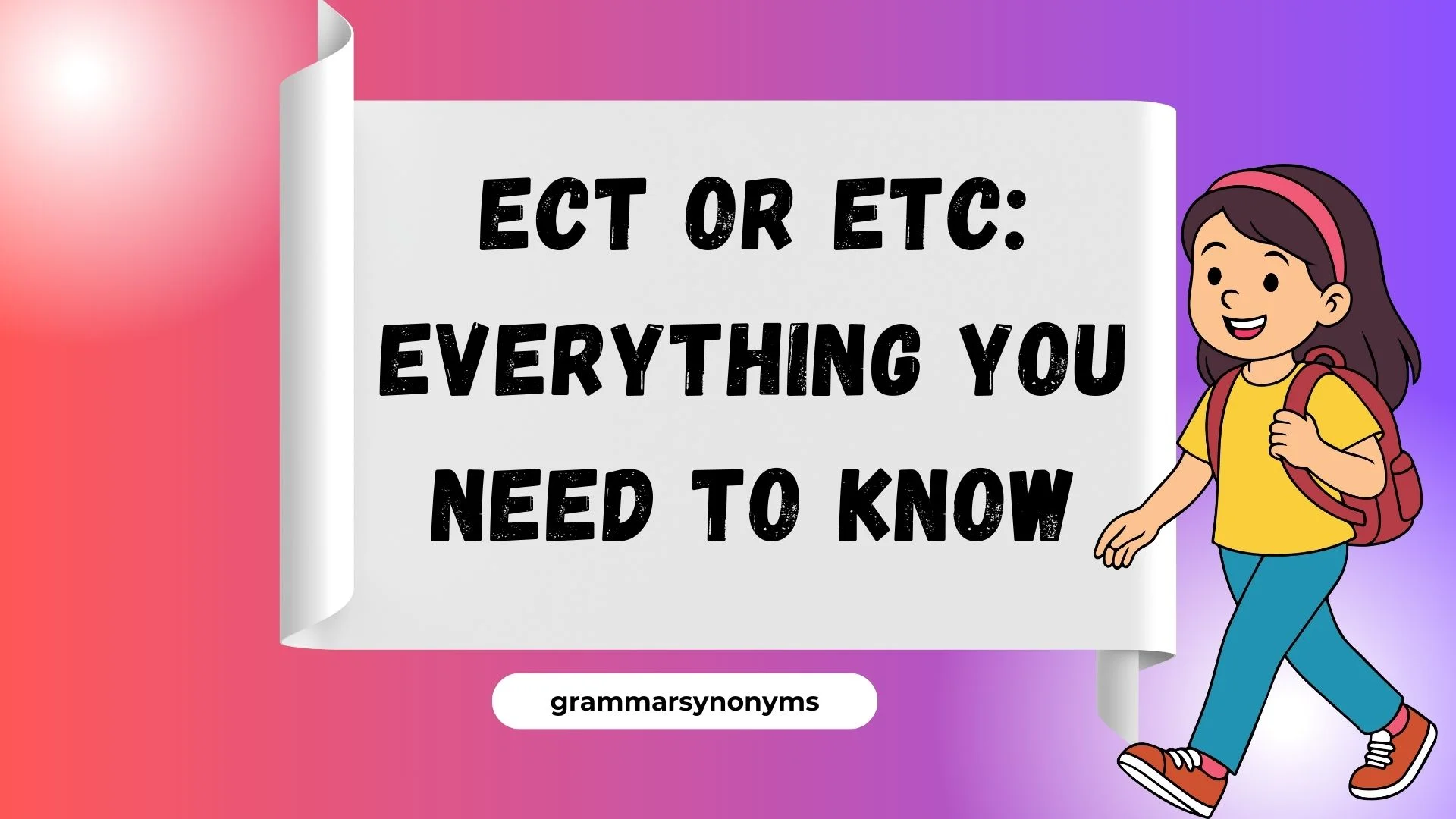
Have you ever wondered whether it’s “Ect” or “Etc” in your emails, reports, or calendar notes?
Confusion over this tiny abbreviation is surprisingly common, especially in business communication, project management, and formal writing. Whether you’re scheduling meetings, managing an online booking system, or broadcasting announcements, using the right form can reflect your professionalism and attention to detail. In this guide, we’ll explore everything you need to know about Ect vs. Etc, including English usage, grammar nuances, and regional differences between US and UK style guides, so you can confidently write with consistency and clarity.
By the end, you’ll not only understand the proper way to use this abbreviation, but also how it fits into broader contexts like calendar management, time management, and project planning. We’ll cover real-world examples from meetings, broadcasting, and business correspondence, highlighting how small details can enhance your formal writing and communication efficiency. So, let’s dive in, have fun, and master this subtle yet essential element of professional English!
What Does “Etc” Mean?
The abbreviation “etc.” comes from the Latin phrase et cetera, which literally translates to “and other things”. It’s used to indicate that a list continues in the same pattern without needing to name every item. Essentially, it’s a convenient shortcut to avoid lengthy or repetitive lists.
Examples of correct usage:
- I packed clothes, shoes, toiletries, etc.
- She enjoys reading novels, magazines, newspapers, etc.
Notice how “etc” suggests that there are additional items not listed. It’s important to remember that it should only follow a list of similar items. Using it haphazardly or with unrelated things can confuse the reader.
Some common synonyms or alternative phrases include:
- And so on
- And the like
- Among others
These can be used interchangeably in casual writing, but in formal writing, “etc.” is generally preferred for brevity and clarity.
Why “Ect” Is Incorrect
One of the most common mistakes in English writing is replacing “etc.” with “ect.” This error usually comes from how the abbreviation sounds when spoken, but phonetics don’t dictate correct spelling.
Reasons “ect” is wrong:
- The Latin origin of et cetera confirms “etc” as correct.
- Most dictionaries and style guides only recognize “etc.”.
- Using “ect” can make your writing appear careless or unprofessional.
Incorrect example:
- I bought apples, oranges, bananas, ect. Wrong
Correct example:
- I bought apples, oranges, bananas, etc. Correct
It’s a small change but a huge difference in credibility, especially in academic or professional contexts.
When to Use “Etc” in Writing
“Etc.” is versatile and can be used in academic, professional, and casual writing, but each context has its own rules.
Academic Writing
In essays, research papers, or reports, “etc.” can summarize additional items without listing them all. However, use it sparingly. Too many “etc.” instances can make your work look vague.
Example:
- The study included participants from various fields: engineering, medicine, law, etc.
Professional/Business Writing
Emails, proposals, and reports benefit from concise lists. “Etc.” helps streamline your message.
Example:
- We will need laptops, monitors, keyboards, etc., for the new office setup.
Casual Writing
In texts, blogs, or social media, “etc.” is more flexible. You can use it for humor or emphasis.
Example:
- Today I ran errands, did laundry, cleaned the kitchen, etc., and now I’m exhausted!
Key Rules for All Contexts
- Always use a period after “etc”.
- Do not start a sentence with “etc.”
- Avoid placing “etc.” after “such as” or “for example” — it’s redundant.
Also Read This: Vender or Vendor: Which Spelling Is Correct?
How to Avoid Mistakes with “Etc”
Even native speakers occasionally misuse “etc.”, but with a few tricks, you can write it confidently every time.
Tips to remember:
- Think Latin: et cetera → etc
- Mnemonic device: “Every Time Correctly” → ETC
- Proofread lists: If you’re unsure, check if the list items are similar.
Tools that help:
- Grammarly or Microsoft Word spellcheck
- Google Docs grammar suggestions
- Online writing guides and style manuals
By incorporating these habits, you’ll rarely see “ect” creep into your work.
Common Myths and Misconceptions
“Etc” Can Start a Sentence
False. Starting a sentence with “etc.” is grammatically incorrect. Instead, rephrase the sentence.
Incorrect:
- Etc. were included in the study.
Correct: - Other items were included in the study, etc.
Overusing “Etc” Is Fine
False. Repeating “etc.” too often can make your writing lazy. Use it sparingly to maintain clarity.
“Etc” Always Replaces All Items
Not always. Use it when the remaining items are obvious or not essential to list individually.
Fun Facts About “Etc”
- Latin roots: et cetera has been used since ancient Roman times.
- Literary usage: Famous authors like Shakespeare and Dickens used etc. in manuscripts.
- Pronunciation: Typically pronounced as /ɛt ˈsɛtərə/ in English.
Knowing these tidbits makes writing “etc.” feel less like a chore and more like mastering a piece of history.
Alternatives to “Etc”
Sometimes, “etc.” isn’t the best choice. Here are alternatives:
| Alternative | Usage Example |
| And so on | We need pens, notebooks, erasers, and so on. |
| Among others | The team included engineers, designers, managers, among others. |
| And the like | Fruits like apples, oranges, bananas, and the like were available. |
These alternatives add variety and can fit different tones of writing.
FAQs
1. What does “Etc” stand for?
Etc is short for et cetera, a Latin phrase meaning “and other things” or “and so on.” It’s used to indicate additional items in a list without writing them all out.
2. Is “Ect” correct?
No, Ect is incorrect. The proper abbreviation is Etc. Using “Ect” is considered a spelling error in both formal writing and business communication.
3. Can I use “Etc” in formal writing or business documents?
Yes, but use it sparingly. In formal reports, emails, or project plans, it’s better to list all items if clarity is crucial. Consistency and professional tone matter most.
4. Are there regional differences in using “Etc”?
The abbreviation Etc is universally accepted in both US and UK English, though punctuation and style guides may differ slightly. Always follow your organization’s preferred style guide.
5. How can I remember the correct usage of “Etc”?
Think et cetera = and the rest. It’s a handy shortcut in calendar notes, scheduling, meetings, and project management, but always ensure it fits the grammar and clarity of your sentence.
Conclusion
In conclusion, understanding the difference between Ect and Etc may seem minor, but it plays a significant role in professional writing, business communication, and project management. Using the correct form ensures clarity, consistency, and adherence to US or UK style guides, whether you’re drafting meeting notes, managing a calendar, or sending formal correspondence.
By mastering this small but important detail, you improve not only your grammar and English usage but also your overall time management and communication efficiency. Remember, attention to detail in abbreviations reflects professionalism, and now you can confidently write, broadcast, and organize with precision. So go ahead, have fun applying this knowledge in every email, report, or project—your writing just got sharper and more polished!

“Emma Rose at Grammar Synonyms is your go-to expert for everything related to language and expression. Whether you’re refining your grammar, searching for the perfect synonym, or looking for creative ways to improve your writing, Emma Rose provides the tools and inspiration you need. With a wide range of resources designed to elevate your communication, Grammar Synonyms helps you find just the right words to make every sentence shine.