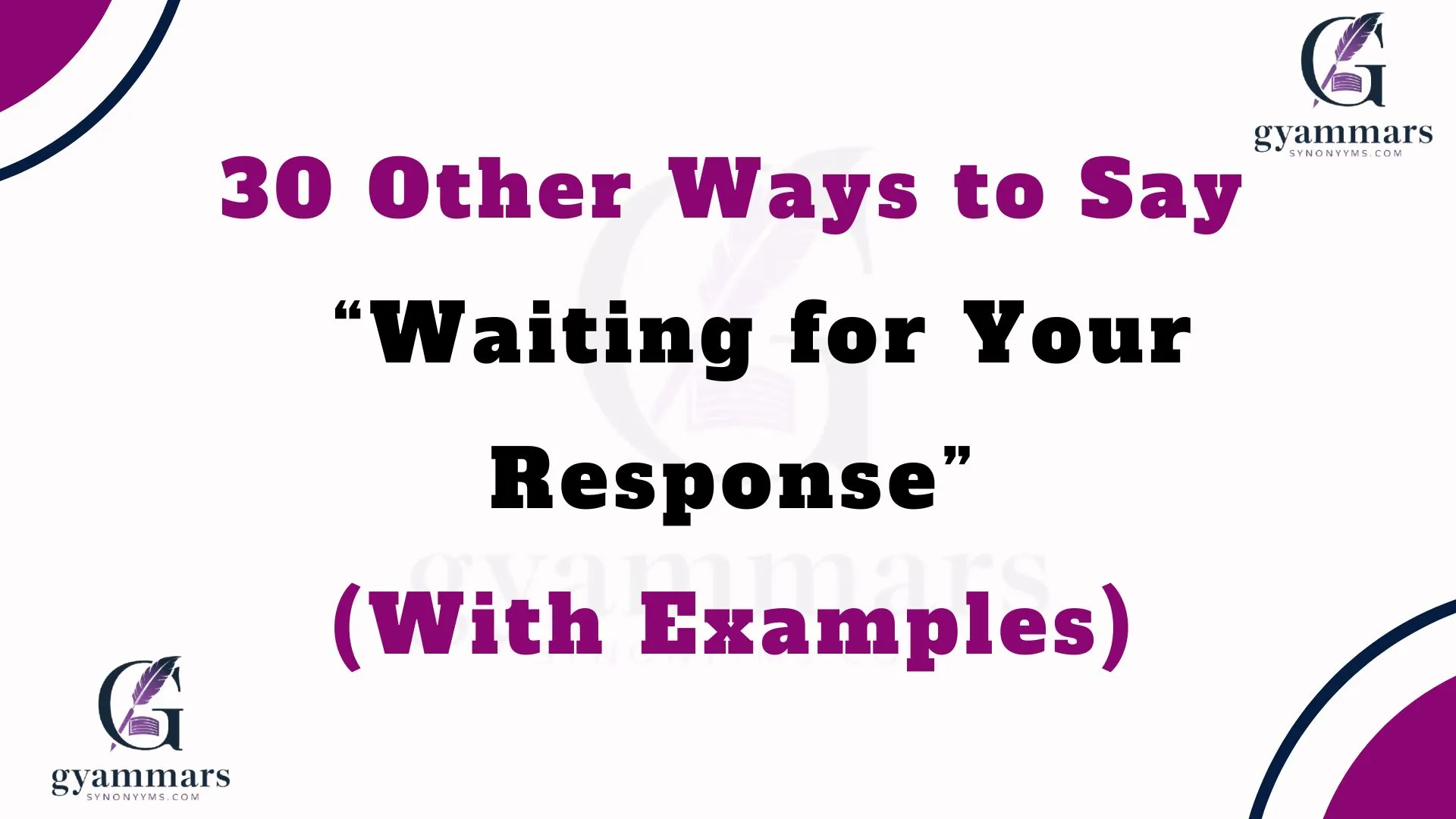
Finding the right words to express care, patience, and professionalism can make all the difference in communication — especially when you’re waiting for someone’s reply. Whether it’s a business email, a friendly check-in, or a follow-up message, using thoughtful language helps you sound approachable yet confident.
This list of 30 alternative ways to say “Waiting for your response” will help you communicate warmth, politeness, and genuine interest—without sounding repetitive or impatient.
What Does “Waiting for Your Response” Mean?
Definition: The phrase “Waiting for your response” is used to tell someone you expect or are looking forward to hearing back from them.
Detailed Explanation: It’s a polite and straightforward way to show that you’re anticipating feedback, confirmation, or an answer to a question. However, while it’s clear, it can sound a little formal or distant if overused—especially in personal or friendly settings.
Scenario Example:
“Thank you for your time. I’m waiting for your response regarding the meeting schedule.”
Best Use: Professional emails, formal job applications, and client communication.
Tone: Neutral, polite, slightly formal.
Additional Notes: To make your message feel warmer, you can choose a softer alternative that sounds inviting and engaging.
Is It Professional/Polite to Say “Waiting for Your Response”?
Yes — it’s perfectly polite and professional, but it depends on context.
If you’re communicating with clients, superiors, or new contacts, it’s acceptable. However, in friendly or conversational emails, it might sound a bit robotic. Using softer alternatives like “Looking forward to hearing from you” or “Hope to hear from you soon” adds a touch of warmth and sincerity.
Pros and Cons of Saying “Waiting for Your Response”
Pros:
- Clear and direct
- Commonly accepted in business settings
- Communicates your expectation for a reply
Cons:
- Can sound too formal or stiff
- Lacks emotional warmth
- May imply impatience if not used carefully
Synonyms For “Nice to Meet You”
- Looking forward to hearing from you
- Hope to hear from you soon
- Awaiting your reply
- I look forward to your feedback
- Eager to hear your thoughts
- Hoping for your response
- Can’t wait to hear back from you
- I’ll wait for your input
- Hoping to connect soon
- Awaiting your confirmation
- Please get back to me soon
- Hoping to continue the conversation
- Let me know your thoughts
- I’d love to hear from you
- Please share your feedback
- Excited to hear your response
- Awaiting your decision
- Kindly respond when you can
- Hoping to receive your reply
- I’ll be here when you’re ready
- Let me know what you think
- Looking forward to your message
- I’m open to your ideas
- Excited to hear your input
- Waiting to hear your perspective
- Please let me know at your earliest convenience
- Anticipating your response
- I appreciate your reply in advance
- Hoping to hear positive news from you
- Take your time — I’ll be here when you’re ready
1. Looking forward to hearing from you
Definition: Expresses eager anticipation to receive a reply.
Detailed Explanation: This phrase balances professionalism with warmth, making it one of the most commonly used alternatives.
Scenario Example:
“I’ve attached the proposal and look forward to hearing from you soon.”
Best Use: Business emails, proposals, and job applications. Tone: Positive, professional, and friendly. Additional Notes: Works well when you want to sound optimistic and approachable.
2. Hope to hear from you soon
Definition: A kind and polite way to encourage a reply.
Detailed Explanation: Slightly less formal, this phrase feels warm and natural, perfect for casual or semi-professional emails.
Scenario Example:
“Thanks for reviewing the draft — hope to hear from you soon!”
Best Use: Friendly follow-ups or informal professional settings. Tone: Friendly and conversational. Additional Notes: Avoid overuse to keep it sounding genuine.
3. Awaiting your reply
Definition: A formal phrase that shows you’re expecting a response.
Detailed Explanation: This works well in corporate or official contexts, especially when deadlines or decisions are involved.
Scenario Example:
“I’ve shared the report for your review. Awaiting your reply.”
Best Use: Business or administrative communication. Tone: Professional, direct, and polite. Additional Notes: Use cautiously to avoid sounding too stiff.
4. I look forward to your feedback
Definition: Shows that you value the recipient’s opinion.
Detailed Explanation: This phrase communicates respect and openness, ideal for when you’re requesting input or evaluation.
Scenario Example:
“Please find my design proposal attached — I look forward to your feedback.”
Best Use: When seeking feedback, evaluations, or approvals. Tone: Respectful and collaborative. Additional Notes: Excellent for teamwork or client relationships.
5. Eager to hear your thoughts
Definition: A friendly phrase that highlights curiosity and openness.
Detailed Explanation: It feels personal and engaging, perfect for conversations that value dialogue and shared ideas.
Scenario Example:
“I really enjoyed our discussion. Eager to hear your thoughts on this plan.”
Best Use: Creative projects, brainstorming, or collaborations. Tone: Enthusiastic and conversational. Additional Notes: Adds a warm human touch to your message.
6. Hoping for your response
Definition: Expresses gentle anticipation for a reply.
Detailed Explanation: Slightly emotional, this phrase conveys sincerity without being too pushy.
Scenario Example:
“I’ve shared all the details — hoping for your response soon.”
Best Use: Personal or heartfelt messages. Tone: Gentle, patient, and kind. Additional Notes: Works well in friendly or customer-service contexts.
7. Can’t wait to hear back from you
Definition: An enthusiastic phrase showing excitement for a reply.
Detailed Explanation: Ideal when you want to sound lively and genuine, but best avoided in very formal settings.
Scenario Example:
“That idea sounds amazing — can’t wait to hear back from you!”
Best Use: Informal or friendly communication. Tone: Excited and warm. Additional Notes: Avoid using in corporate emails.
8. I’ll wait for your input
Definition: Shows patience and respect for the recipient’s contribution.
Detailed Explanation: Indicates you’re open and collaborative, making it great for team discussions.
Scenario Example:
“I’ve added my part — I’ll wait for your input before finalizing.”
Best Use: Teamwork or shared projects. Tone: Respectful and cooperative. Additional Notes: Keeps your message professional yet inclusive.
9. Hoping to connect soon
Definition: A warm invitation for continued communication.
Detailed Explanation: Instead of directly asking for a reply, it creates a friendly sense of anticipation.
Scenario Example:
“It was great chatting with you. Hoping to connect soon!”
Best Use: Networking, outreach, or casual follow-ups. Tone: Friendly and optimistic. Additional Notes: Perfect for building relationships.
10. Awaiting your confirmation
Definition: Indicates you’re waiting for approval or acknowledgment.
Detailed Explanation: Best for formal or logistical messages, where confirmation is necessary.
Scenario Example:
“I’ve booked the meeting for Friday — awaiting your confirmation.”
Best Use: Scheduling, approvals, and official correspondence. Tone: Formal and professional. Additional Notes: Use precisely when expecting confirmation.
11. Please get back to me soon
Definition: A polite request for a quick response.
Detailed Explanation: This phrase balances urgency and courtesy, perfect when you want to encourage prompt feedback without sounding demanding.
Scenario Example:
“I wanted to confirm the shipment details — please get back to me soon.”
Best Use: When timing is important but tone must remain polite. Tone: Courteous and direct. Additional Notes: Add “please” to maintain warmth and professionalism.
12. Hoping to continue the conversation
Definition: A gentle nudge that shows you value an ongoing dialogue.
Detailed Explanation: It feels collaborative and thoughtful, especially when discussing ideas or negotiations.
Scenario Example:
“Thanks for your insights today. Hoping to continue the conversation next week.”
Best Use: For follow-ups, partnerships, or client relations. Tone: Warm and engaging. Additional Notes: Works beautifully in relationship-building messages.
13. Let me know your thoughts
Definition: An inviting way to ask for feedback or input.
Detailed Explanation: It’s friendly and natural, encouraging an open exchange without pressure.
Scenario Example:
“I’ve attached my proposal — let me know your thoughts.”
Best Use: Creative discussions, proposals, or project updates. Tone: Approachable and conversational. Additional Notes: Great for casual and semi-formal messages alike.
14. I’d love to hear from you
Definition: A heartfelt phrase expressing genuine interest in a reply.
Detailed Explanation: Best for messages that require warmth or personal connection.
Scenario Example:
“It’s been a while since we last talked — I’d love to hear from you.”
Best Use: Personal messages or friendly professional follow-ups. Tone: Affectionate, warm, and kind. Additional Notes: Avoid in strictly corporate contexts.
15. Please share your feedback
Definition: A respectful request for thoughts or evaluation.
Detailed Explanation: This phrase feels professional and open-minded, ideal when seeking constructive responses.
Scenario Example:
“I’ve attached the first draft — please share your feedback.”
Best Use: Work collaborations or client communications. Tone: Courteous and professional. Additional Notes: Shows willingness to improve and engage.
16. Excited to hear your response
Definition: A vibrant and enthusiastic way to express anticipation.
Detailed Explanation: Conveys energy and positivity, suitable for friendly or creative exchanges.
Scenario Example:
“This project means a lot to me — excited to hear your response!”
Best Use: Informal but professional settings. Tone: Energetic and cheerful. Additional Notes: Avoid overuse in formal correspondence.
17. Awaiting your decision
Definition: Indicates you’re waiting for a choice or conclusion.
Detailed Explanation: This phrase signals respectful patience and recognition of the other person’s authority.
Scenario Example:
“I’ve submitted all the materials — awaiting your decision.”
Best Use: Business or managerial communications. Tone: Professional and calm. Additional Notes: Often used for formal proposals or applications.
Also Read This: 30 Other Ways to Say “Nice to Meet You” (With Examples)
18. Kindly respond when you can
Definition: A soft, respectful request for a reply.
Detailed Explanation: Ideal when you don’t want to rush the recipient but still show interest in hearing back.
Scenario Example:
“No rush, but kindly respond when you can.”
Best Use: Polite and patient follow-ups. Tone: Gentle and kind. Additional Notes: A great blend of courtesy and consideration.
19. Hoping to receive your reply
Definition: Expresses anticipation while maintaining politeness.
Detailed Explanation: It’s a formal yet friendly phrase suitable for most professional emails.
Scenario Example:
“Thank you for reviewing my resume — hoping to receive your reply soon.”
Best Use: Job applications and formal correspondence. Tone: Professional and respectful. Additional Notes: A slightly softer version of “awaiting your reply.”
20. I’ll be here when you’re ready
Definition: Conveys patience and reassurance.
Detailed Explanation: This phrase shows understanding and empathy, ideal when you don’t want to rush someone.
Scenario Example:
“Take your time — I’ll be here when you’re ready.”
Best Use: Sensitive or personal communications. Tone: Kind, gentle, and empathetic. Additional Notes: Perfect for maintaining warmth and trust.
21. Let me know what you think
Definition: A relaxed and friendly invitation for opinions.
Detailed Explanation: Keeps the tone open and non-demanding, which makes it great for everyday messages.
Scenario Example:
“I’ve made a few edits — let me know what you think.”
Best Use: Team discussions, creative collaborations. Tone: Casual and friendly. Additional Notes: Ideal for emails among colleagues or friends.
22. Looking forward to your message
Definition: Similar to “looking forward to hearing from you,” but a bit more personal and modern.
Detailed Explanation: Works well when communication is conversational or informal.
Scenario Example:
“It was great meeting you today — looking forward to your message.”
Best Use: Networking and friendly follow-ups. Tone: Polite and personable. Additional Notes: Great for email or text follow-ups.
23. I’m open to your ideas
Definition: Expresses receptiveness and collaboration.
Detailed Explanation: Encourages two-way communication and signals that you value others’ input.
Scenario Example:
“I’d love your take on this — I’m open to your ideas.”
Best Use: Team meetings and brainstorming sessions. Tone: Supportive and inclusive. Additional Notes: Ideal for leadership or collaborative projects.
24. Excited to hear your input
Definition: A lively, positive way to show interest in someone’s feedback.
Detailed Explanation: Encourages participation while maintaining enthusiasm.
Scenario Example:
“The project is shaping up nicely — excited to hear your input!”
Best Use: Creative and teamwork settings. Tone: Energetic and welcoming. Additional Notes: Use to build rapport and motivate responses.
25. Waiting to hear your perspective
Definition: A thoughtful and respectful phrase for seeking opinions.
Detailed Explanation: Perfect for showing you value another person’s viewpoint.
Scenario Example:
“I’d like to finalize soon but am waiting to hear your perspective.”
Best Use: Strategic discussions or feedback loops. Tone: Considerate and professional. Additional Notes: Ideal for management or collaboration.
26. Please let me know at your earliest convenience
Definition: A formal request for a reply when timing matters.
Detailed Explanation: Used in business communication when you need an answer soon but wish to remain polite.
Scenario Example:
“Please let me know your availability at your earliest convenience.”
Best Use: Business, scheduling, or client emails. Tone: Formal and respectful. Additional Notes: Common in corporate or official letters.
27. Anticipating your response
Definition: Suggests expectation and eagerness for communication.
Detailed Explanation: It’s a formal yet sincere phrase, often used in official emails.
Scenario Example:
“We’ve submitted the proposal and are anticipating your response.”
Best Use: Business and partnership follow-ups. Tone: Formal, respectful, slightly optimistic. Additional Notes: Great for high-stakes correspondence.
28. I appreciate your reply in advance
Definition: Shows gratitude while expecting a response.
Detailed Explanation: Combines thankfulness and professionalism, making it ideal for courteous requests.
Scenario Example:
“I appreciate your reply in advance regarding the project details.”
Best Use: Requests, inquiries, or client emails. Tone: Polite and appreciative. Additional Notes: Works best when expressing gratitude before the reply.
29. Hoping to hear positive news from you
Definition: A hopeful and uplifting phrase.
Detailed Explanation: Adds a touch of optimism, often used when awaiting outcomes.
Scenario Example:
“Thank you for the opportunity — hoping to hear positive news from you soon.”
Best Use: Job applications, proposal follow-ups. Tone: Hopeful and warm. Additional Notes: Best for closing optimistic messages.
30. Take your time — I’ll be here when you’re ready
Definition: A compassionate, patient phrase showing understanding.
Detailed Explanation: Perfect for gentle reminders or when you want to reassure the other person there’s no rush.
Scenario Example:
“No worries if you’re busy — take your time, I’ll be here when you’re ready.”
Best Use: Personal or empathetic exchanges. Tone: Calm, caring, and understanding. Additional Notes: Great for building trust and emotional comfort.
Conclusion
Finding the right way to say “waiting for your response” can transform a simple message into something warm, professional, and human. Whether you’re following up on an email, reaching out to a client, or checking in with a friend, these alternatives allow you to express yourself with clarity, empathy, and sincerity. Remember — good communication isn’t just about getting a reply; it’s about building meaningful connections through thoughtful words.
FAQs
1. What’s the most polite way to say “waiting for your response”?
→ “Looking forward to hearing from you” or “Kindly respond when you can” sound polite and professional.
2. What’s best for professional emails?
→ Use “Please let me know at your earliest convenience” or “Awaiting your confirmation.”
3. Which phrase sounds warm but formal?
→ “I look forward to your feedback” strikes a perfect balance.
4. How can I follow up without sounding pushy?
→ Use softer tones like “Just checking in” or “Hoping to continue the conversation.”
5. Should I always end with a response phrase?
→ Not always. Use it when you need engagement or clarity, but avoid repetition.

“Emma Rose at Grammar Synonyms is your go-to expert for everything related to language and expression. Whether you’re refining your grammar, searching for the perfect synonym, or looking for creative ways to improve your writing, Emma Rose provides the tools and inspiration you need. With a wide range of resources designed to elevate your communication, Grammar Synonyms helps you find just the right words to make every sentence shine.