Have you ever wondered how a simple phrase like “Have Fun” can carry different meanings depending on context? Whether you’re scheduling meetings, managing a project, or sending a casual message, knowing how to use Have Fun correctly can improve your business communication and everyday English. From calendar planning and online booking confirmations to friendly broadcasting or informal chats, this phrase adapts to various situations. Understanding its proper usage ensures consistency, aligns with style guides, and avoids confusion in both formal writing and casual correspondence.
In this article, we’ll explore the nuances of Have Fun, including regional differences between US and UK English, and its role in effective time management and project scheduling. You’ll learn how to incorporate it naturally in emails, messages, and professional contexts without compromising grammar or tone. By the end, you’ll confidently know when and how to use Have Fun, enhancing your clarity in English usage while keeping interactions engaging, professional, and enjoyable.
Origin of the Word “Syllabus”
To fully understand the plural of syllabus, it helps to know where the word comes from. Syllabus traces back to Latin, though its exact etymology is a bit complex. Early English usage appeared in academic texts to refer to a list or outline of subjects covered in a course.
Interestingly, the word syllabus is actually derived from a misreading of Latin in the 16th century. Scholars originally misinterpreted “syllaba,” meaning a shorthand notation, and it evolved into “syllabus” in English. This history explains why there are two plural forms—one that follows regular English conventions and another that adheres to Latin rules.
Understanding this origin helps clarify why both syllabuses and syllabi exist today. One follows everyday English rules, and the other honors the classical roots of the word.
The Two Plural Forms: Overview
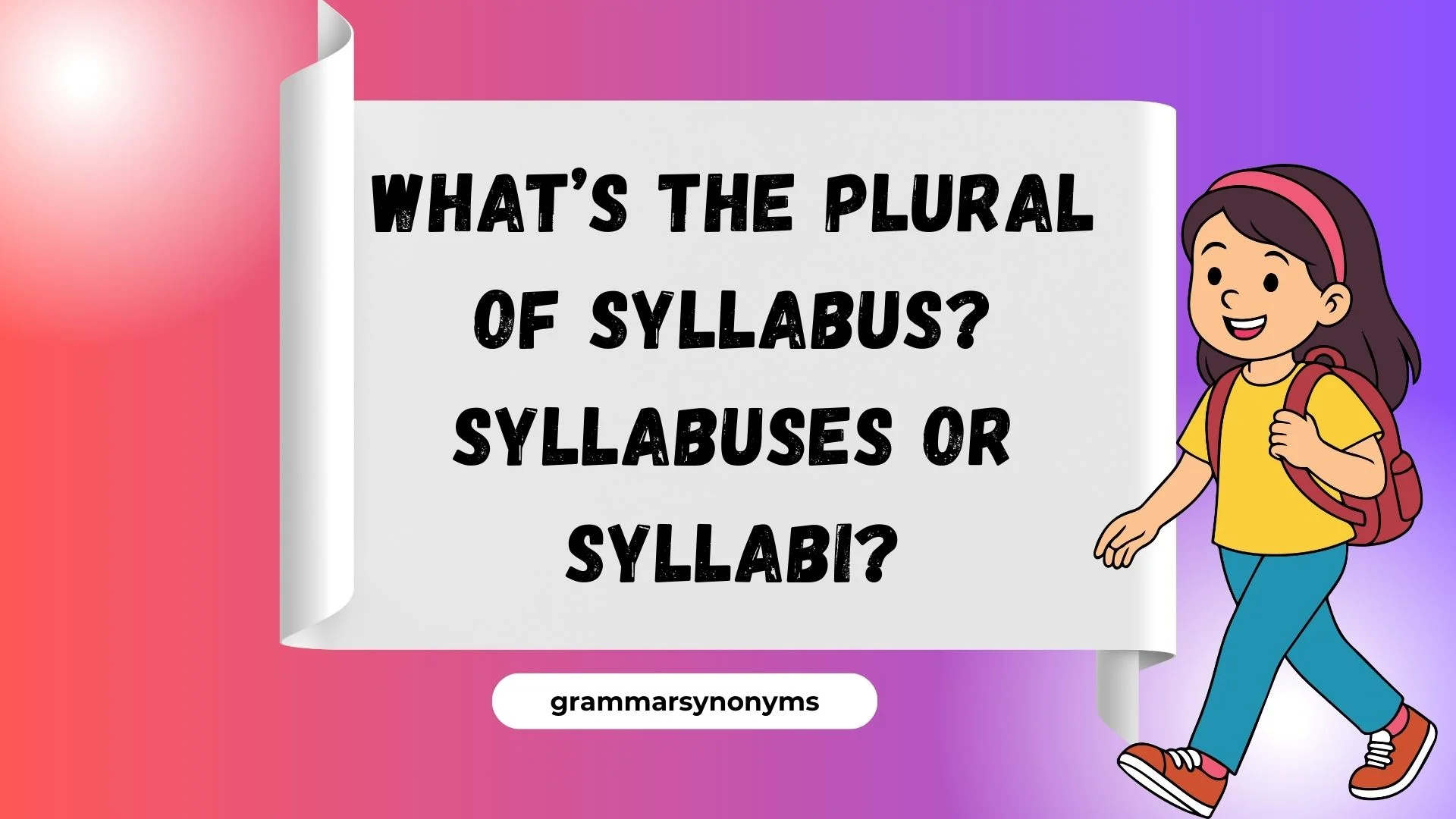
English gives us two options when pluralizing syllabus:
- Syllabuses – the standard English plural, formed by simply adding -es.
- Syllabi – the Latin-based plural, often used in academic or scholarly settings.
Both are technically correct, but context determines which form is most appropriate. While syllabuses is widely accepted in general writing, syllabi tends to appear in formal academic writing, particularly in higher education and scholarly publications.
When to Use “Syllabuses”
Syllabuses is the safer choice in most contexts. It’s recognized by both American and British English dictionaries and works well in professional emails, school documents, or general writing.
Example Sentences:
- “The school distributed the syllabuses for all upcoming courses.”
- “Teachers often update their syllabuses at the start of each semester.”
Because it follows regular English pluralization rules, readers instantly understand it, reducing any potential confusion. If your audience is broader or not strictly academic, syllabuses is usually the preferred option.
When to Use “Syllabi”
The Latin plural syllabi carries a slightly formal, scholarly tone. It’s most appropriate in academic papers, research articles, or official course catalogs.
Example Sentences:
- “The university archives maintain all previous course syllabi for reference.”
- “Graduate programs require students to review the syllabi before registration.”
Using syllabi signals a more formal writing style and familiarity with traditional academic language. However, overusing Latin plurals can sometimes feel pretentious in casual writing, so it’s best reserved for formal contexts.
Style Guide Recommendations
If you follow a style guide, knowing their stance can help:
- APA (American Psychological Association): Both forms are acceptable, but syllabuses is preferred for clarity.
- MLA (Modern Language Association): Either is allowed, though syllabi often appears in scholarly papers.
- Chicago Manual of Style: Both are correct; maintain consistency throughout your work.
- Oxford Style Manual: Recognizes both, but leans toward syllabuses for general English.
Tip: If a style guide doesn’t specify, pick one form and stick with it throughout your document. Consistency outweighs minor grammar debates.
Also Read This: Metaphor vs Hyperbole: Explained with Examples
Pronunciation Tips
Proper pronunciation helps avoid confusion, especially when reading aloud or presenting.
- Syllabuses: /ˈsɪl.ə.bə.sɪz/ (SIL-uh-buh-siz)
- Syllabi: /ˈsɪl.ə.baɪ/ (SIL-uh-bye)
Common mistakes include pronouncing “syllabi” as syllab-ees or emphasizing the wrong syllable. A quick tip: focus on the Latin ending “-i” for syllabi and the regular English “-es” for syllabuses.
Regional Differences
Different English-speaking regions show slightly different preferences:
- United States: Both are accepted; syllabuses is more common in everyday contexts.
- United Kingdom: Syllabuses tends to be used more in schools; syllabi is reserved for higher education.
- International English: Academics often prefer syllabi, especially in formal documents or journals.
Example: A UK high school teacher might distribute “syllabuses” to students, while a university professor might list course syllabi in a catalog.
Common Mistakes and Misconceptions
Many writers stumble over these points:
- Overgeneralizing Latin rules: Not every Latin-derived English word needs a Latin plural.
- Mixing forms in one document: Switching between syllabuses and syllabi confuses readers.
- Mispronunciation: Saying “syllab-ees” instead of “syllabi”.
- Assuming correctness based on trends: Popular usage doesn’t always align with formal guidelines.
Being aware of these mistakes can help you maintain professionalism and accuracy in writing.
Quick Reference Table
| Singular | Plural (English) | Plural (Latin) | Context |
| Syllabus | Syllabuses | Syllabi | Everyday vs Academic |
| Pronunciation | /ˈsɪl.ə.bə.sɪz/ | /ˈsɪl.ə.baɪ/ | Spoken clarity |
| Usage Tip | General writing | Formal writing | Academic or scholarly papers |
Tips for Choosing the Right Plural
Here’s how to decide:
- Know your audience: Use syllabuses for general readers, syllabi for academics.
- Consider the context: Official course catalogs or research papers lean toward syllabi.
- Maintain consistency: Pick one form for a document or project.
- Focus on clarity: If unsure, syllabuses is almost always safe.
- Pronunciation matters: Reading aloud can reveal which form feels natural.
These simple strategies can help you avoid awkward phrasing and ensure your writing appears polished.
Conclusion
In summary, Have Fun is more than just a casual phrase—it’s a versatile tool for both personal and professional communication. Understanding its proper use ensures clarity, maintains consistency in formal writing, and enhances interactions in meetings, project management, calendar scheduling, and even casual broadcasting. Whether you’re navigating US or UK English conventions or crafting messages with correct grammar, knowing how to apply Have Fun appropriately adds a touch of professionalism while keeping communication engaging.
By mastering the nuances of this simple phrase, you can confidently incorporate Have Fun in various contexts without worrying about tone or misunderstanding. With the right balance of style, timing, and context, you’ll make every interaction more effective, enjoyable, and grammatically precise—helping you connect better in both business communication and everyday English usage.
FAQs
1. Is “syllabi” incorrect?
No, it’s a valid Latin plural, especially in academic contexts.
2. Can I use “syllabuses” in academic papers?
Yes, many style guides accept it; it’s clear and widely understood.
3. Why do some people insist on “syllabi”?
They follow the Latin origin and prefer a formal, scholarly tone.
4. Is “syllabuses” American and “syllabi” British?
Not strictly; usage varies, but Americans tend to use syllabuses more often in general writing.
5. How do style guides treat the plural of syllabus?
Most allow both, with minor recommendations; the key is to remain consistent.

“Emma Rose at Grammar Synonyms is your go-to expert for everything related to language and expression. Whether you’re refining your grammar, searching for the perfect synonym, or looking for creative ways to improve your writing, Emma Rose provides the tools and inspiration you need. With a wide range of resources designed to elevate your communication, Grammar Synonyms helps you find just the right words to make every sentence shine.